Point of view
Short pieces on how product organizations learn best—hard-won lessons from the field.
Innovation
Product discovery
"If I asked people what they wanted, they would have asked for a faster horse."
This line—usually attributed to Henry Ford—is often deployed to dismiss what customers say, and sometimes even product research as a discipline. But the person doing the dismissing is hearing the word "horse." Any researcher worth their salt hears "faster."
It's not the customer's job to imagine a car—that's the job of the product team at the carriage company. But typical teams focus on improving the "carriage"—build quality, durability, weight, ride comfort, cost.
Why? It's not for lack of will or imagination. It's structural. Previous successes and how they're measured frame our view of the future.
Product teams that over-index on behavioral data generated by existing products are building a rearview theory of their customer—seeing opportunities through a tiny, backward-looking window. Teams that have mastered the discipline of turning novel insights into successful outcomes see the landscape in front of them, overcome the weight of the past, and deliver on "faster."
Of course product discovery doesn't come from simply asking customers what they want. It comes from revealing new information from outside the organization that challenges the team's existing assumptions—long before the market does it for them. Great research doesn't deliver insights. It builds the organization's capacity for product discovery.
My career centers on building product teams' capacity to look ahead—to identify the right problems to solve, and to solve them right. My superpower is building the practices and infrastructure that routinely reveal the next opportunity and translate it into a winning product strategy.
Leadership
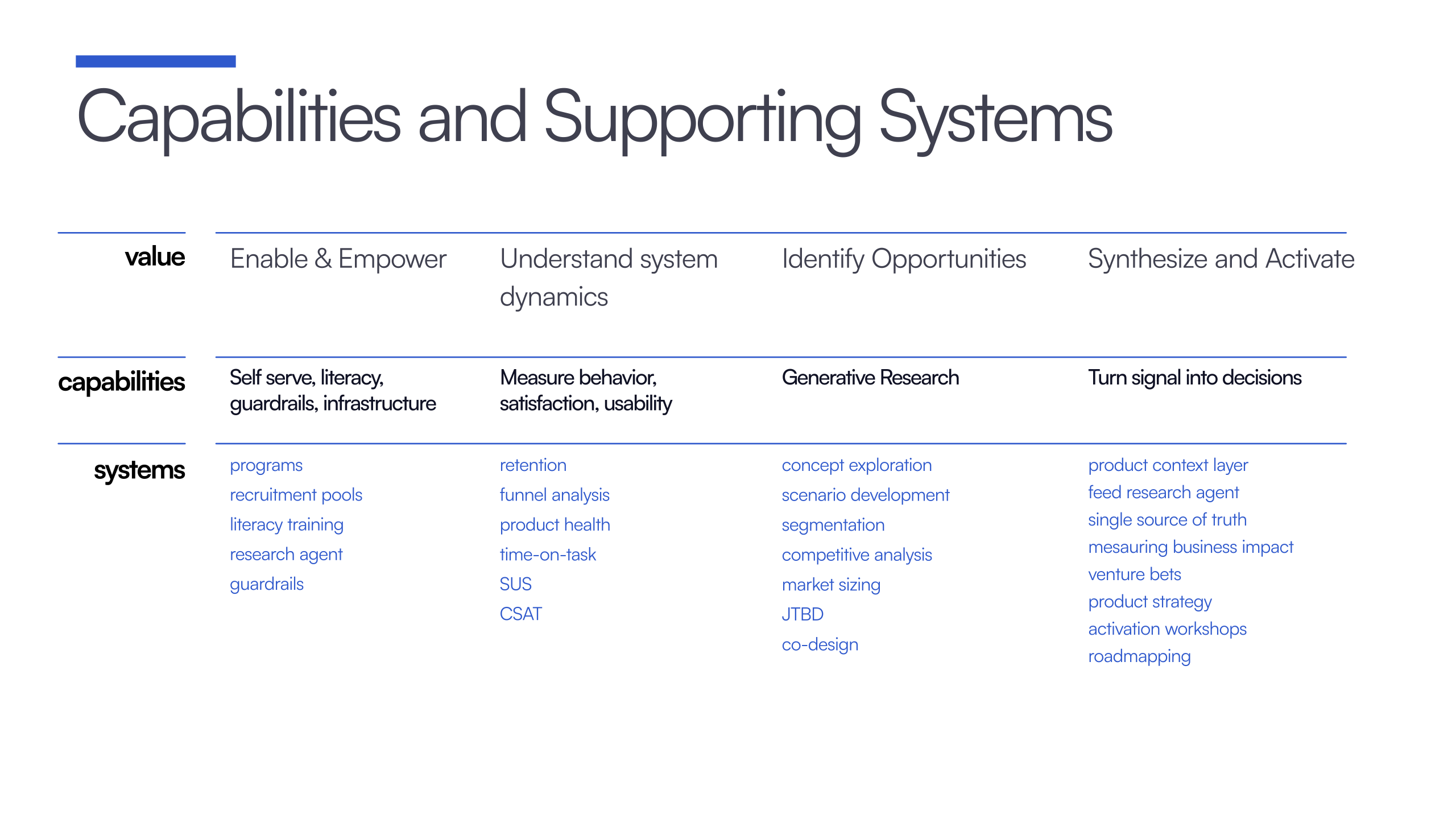
Build systems, not studies and decks.
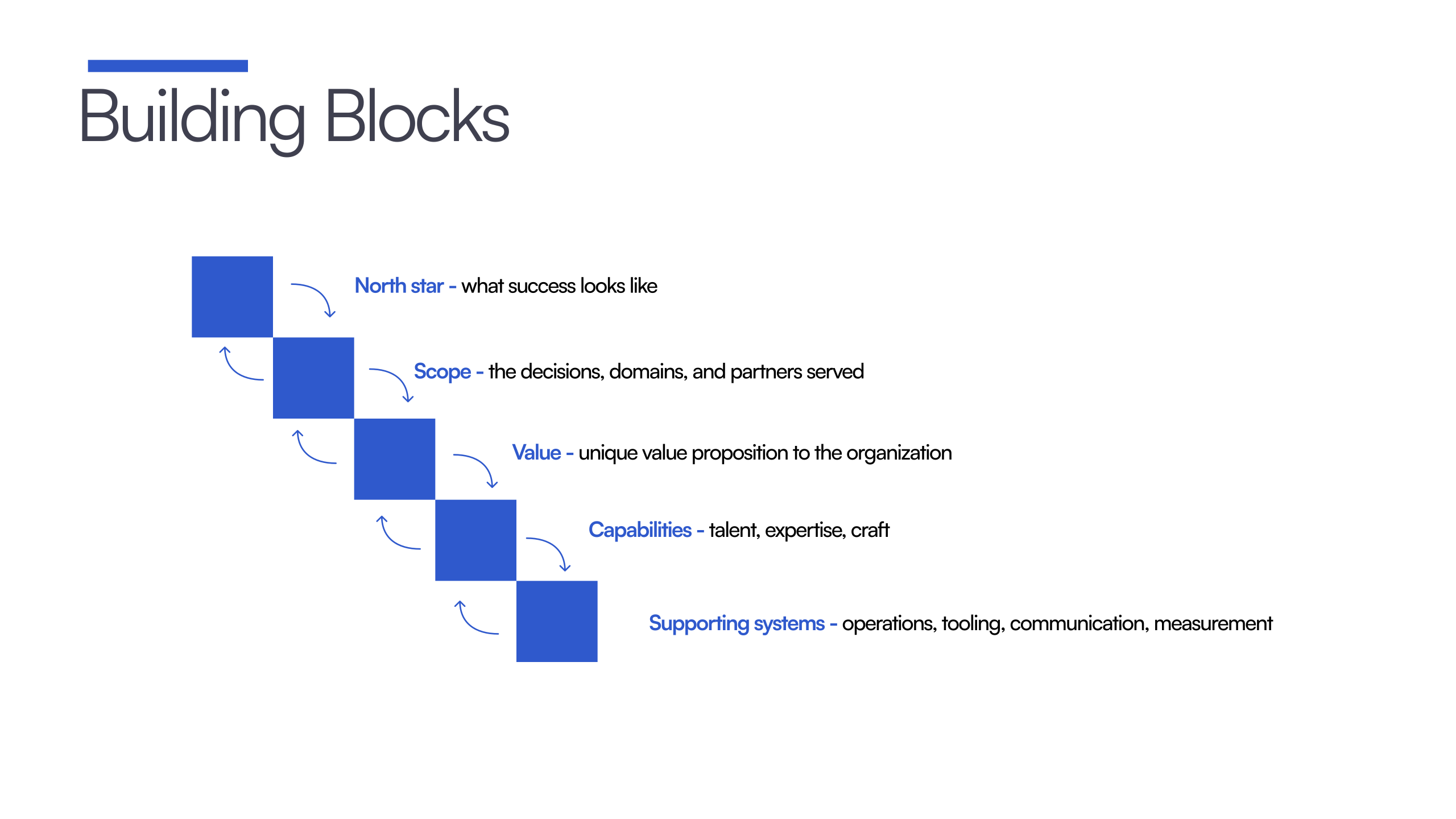
When I'm developing a research strategy, I start with what the team already knows—data, beliefs, hypotheses, assumptions—and what they actually need to decide. That conversation usually changes the question they came in wanting to answer, and often reveals their understanding of the customer was never the constraint.
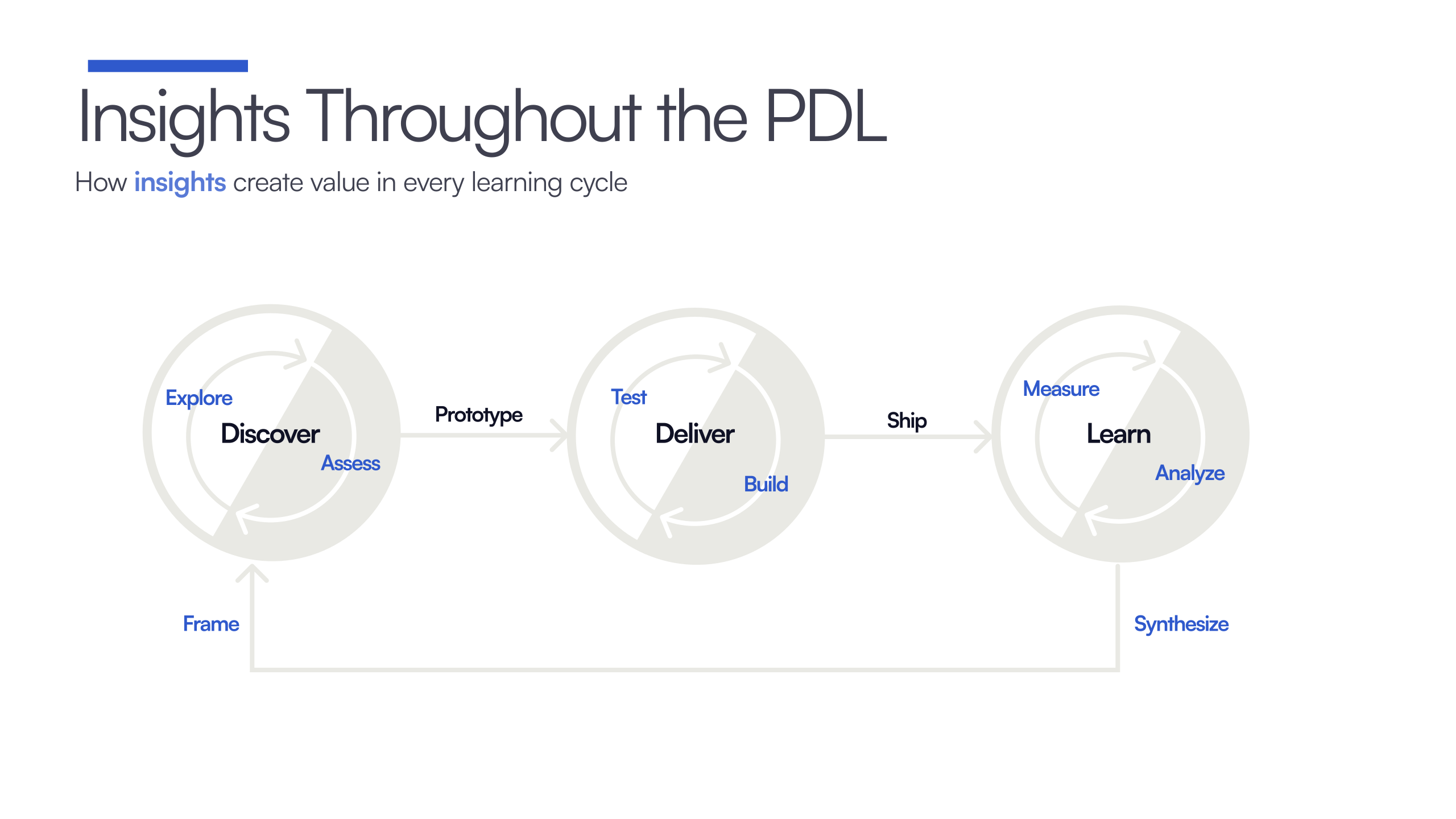
The next step isn't as simple as “go and get the answer and bring it back.” I like to run the team through a shared learning cycle rather than deliver studies and decks. Running learning cycles is a necessarily cross-functional discipline that involves identifying the right questions before resources are committed, and agreeing up front that if we find something unexpected, or counterfactual, the team will change course. If the work is really about validating a decision already made, it's of limited value and probably shouldn't happen.
Getting the framing right is the most critical part of a researcher’s job, because a team that solves the wrong problem well has still failed—it just took longer and cost more. It's also a skill a product team can learn.
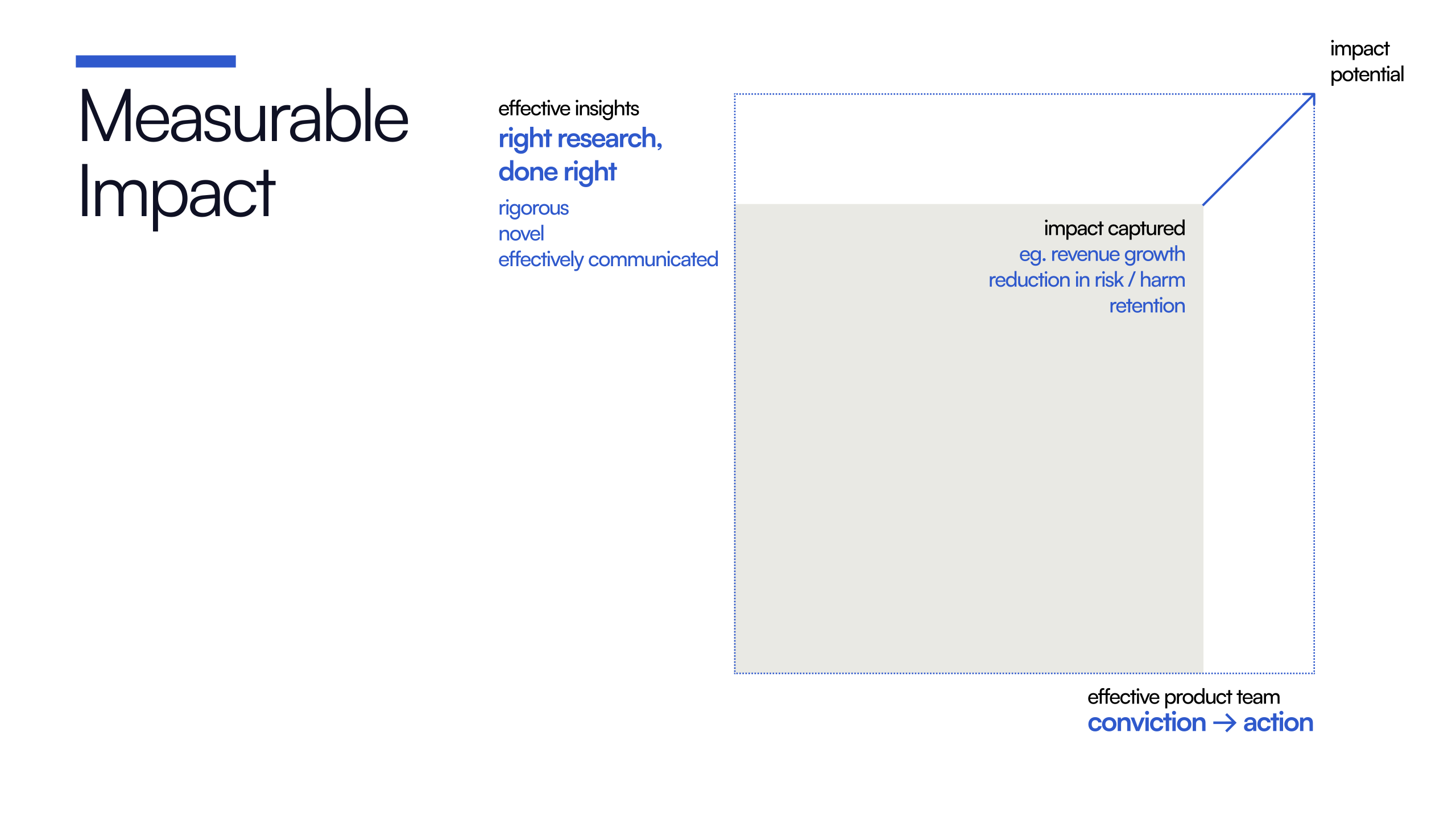
I measure myself by the decisions research informs and how much a product strategy changes as a result—not by studies shipped. Research's impact isn't limited by headcount or tooling but by its ability to improve the quality of judgment across the broader product team.
Strategy
Create value, don't extract it
Every company has two ways to make its next dollar. Build something people actually want, and get rewarded for it. Or take a little more from existing customers—a bit more of their attention, patience, or goodwill.
The two look identical in quarterly reports. The difference only shows up later, as a set of costs that are hard to attribute—churn, quiet disengagement, a product nobody would miss. Standard reporting systems aren't built to see these costs and attribute them to product decisions. The finance team is tracking the latest launch and its impact on engagement and revenue, rarely trust and satisfaction. So the erosion of trust is invisible to leadership—until it isn't, and by then it's very expensive to fix.
Great research can make the relationship between trust and growth visible. An evidence backed account of what customers actually need, the value your product provides in the context of their lives, and the value they place on quality and trust. While it's challenging to put an exact price on trust or loyalty or see things change directly as a result of a new product launch, research can show which direction sentiment is moving and why, before the growth and retention curves start to flatten.
Can extractive growth strategy work? Yes. Again and again? Sometimes, yes. But I'm always going to offer leadership the other path to growth—by building something people love.
Values
The principles underneath how I lead.
Inclusion
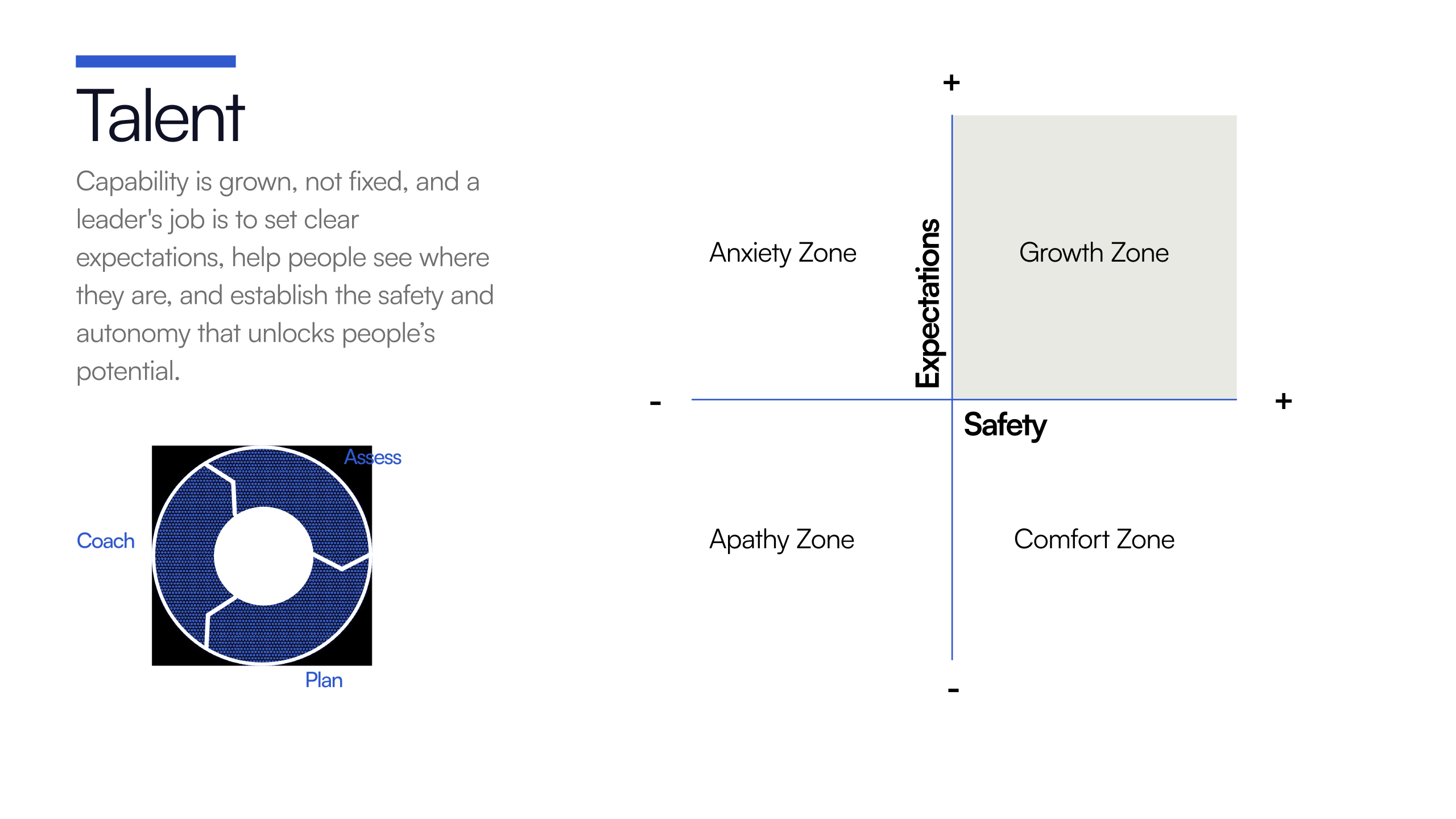
People do their best work when they can make mistakes, learn, and grow together. When their differences are seen, understood, and respected. When individual success contributes to collective success. The conditions for inclusion must be created and then reinforced in every interaction, every team ritual. And the credit has to travel: elevate the people around you, name whose work it was, celebrate the wins together.
Curiosity
When curiosity is in short supply, people end up making costly mistakes. On the other hand, genuine curiosity is infectious. Do people ask questions when they don't understand? Do product teams have rituals that make their assumptions visible? Can leaders be wrong and publicly demonstrate a growth mindset? In a market changing this fast this is a cultural necessity.
Holistic value creation
Value that accrues to only one party isn't value, it's extraction. Work worth doing creates something real for users, customers, stakeholders, and society at large. I hold myself to be a citizen first, an agent of the business second. The way the work gets done matters. The business model matters.
Intellectual honesty
Start with the hard conversation. Name the constraint, be real about the failed bet, actually talk about the incentives driving counter-productive behavior, find where to intervene in the system for maximum leverage, and stay clear-eyed about risk. Courage is half of it; the other half is delivering it so people can actually hear it—a true thing said in a way the room can't take in hasn't been said. Organizations that reward courage over conformity find out what's true sooner—and those are the ones I've stayed at longest.
Ownership
I care about the ends, the deliverable is just a means. The work isn't done until an insight changes what ships, and what ships moves a metric. That means holding a high bar for what we're aiming at, staying with a problem past the point where my part of it is done, and treating the business result as mine even when the mechanism belongs to someone else.